01 · habitat
Equatorial humidity
Rambutan trees thrive in warm, humid climates with plenty of rainfall. Think dense greenery, heavy air, and zero frost.
SE asia
A tropical fruit that looks more like an organism from deep space than something you'd find on a tree. Soft flesh, spiky shell, and an appearance that shouldn't belong on this planet.
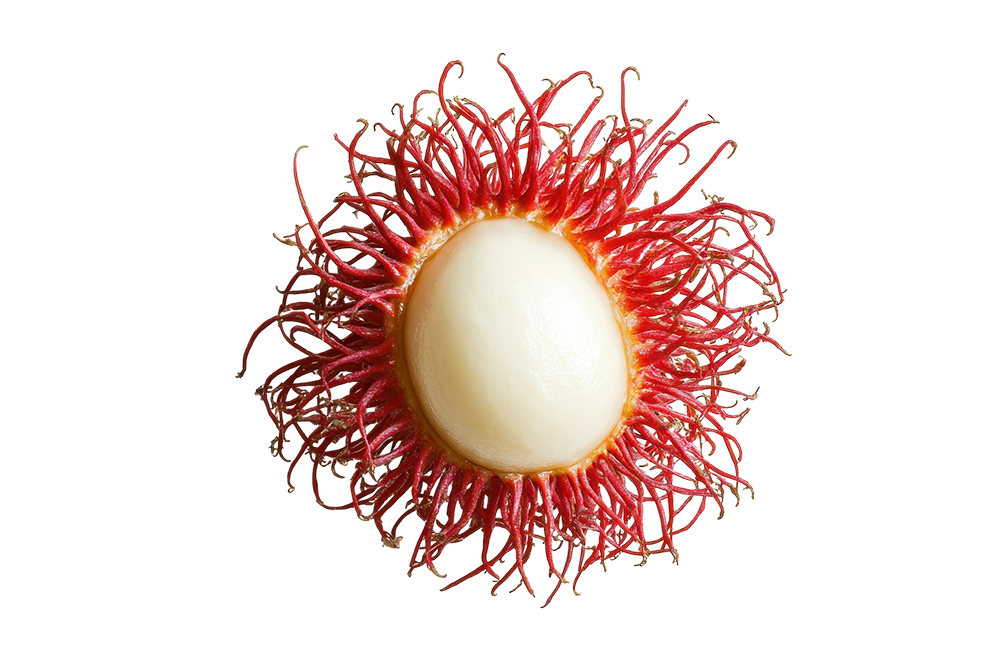
The rambutan is native to the Malay–Indonesian region, yet its design language feels like it was prototyped in a bio-lab in orbit.
Rambutan trees thrive in warm, humid climates with plenty of rainfall. Think dense greenery, heavy air, and zero frost.
The hair-like structures are soft, flexible, and almost playful – a visual contradiction to its aggressive silhouette.
Once opened, the alien exterior reveals a smooth, pearly interior. Strange on the outside, comforting on the inside.
Break the fruit down into layers: from spiky shell to translucent flesh and hidden seed. A full specimen map in three parts.
The red skin is covered with flexible spines that change color as the fruit ripens. Visually aggressive, physically gentle.
Under the shell lies a juicy, translucent pulp. Its texture is similar to lychee, clinging softly to the inner seed.
A single elongated seed sits at the center, carrying the blueprint for the next generation of this alien-looking fruit.
On the palate, rambutan feels familiar: sweet, fresh, hydrating. But its visual language keeps reminding you this shouldn't be growing on Earth.
Different moods of the same fruit: clustered, isolated, sliced, backlit. Each angle reinforces the alien-like structure.