WHAT IS ECLECTIC
ARCHITECTURE?
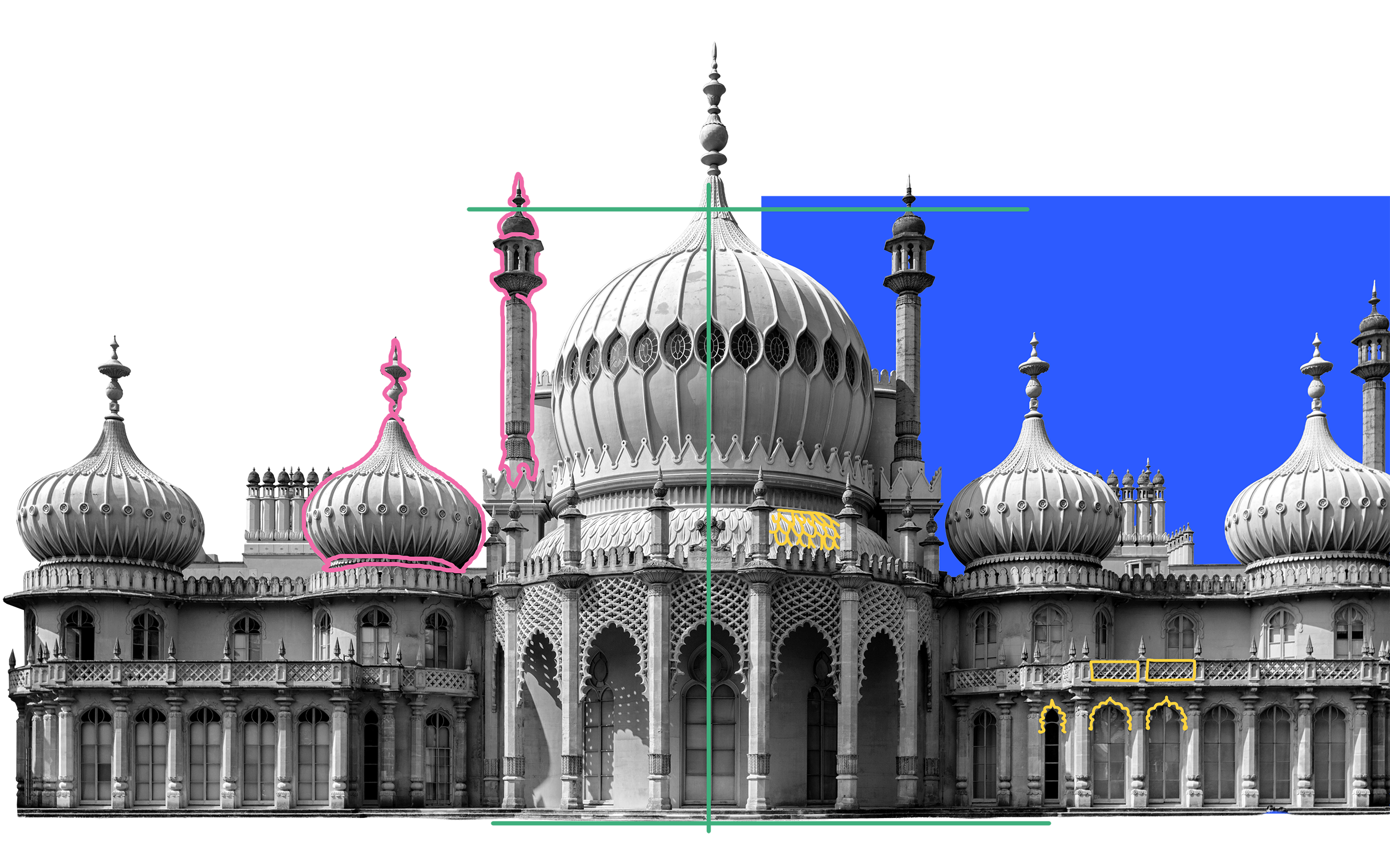
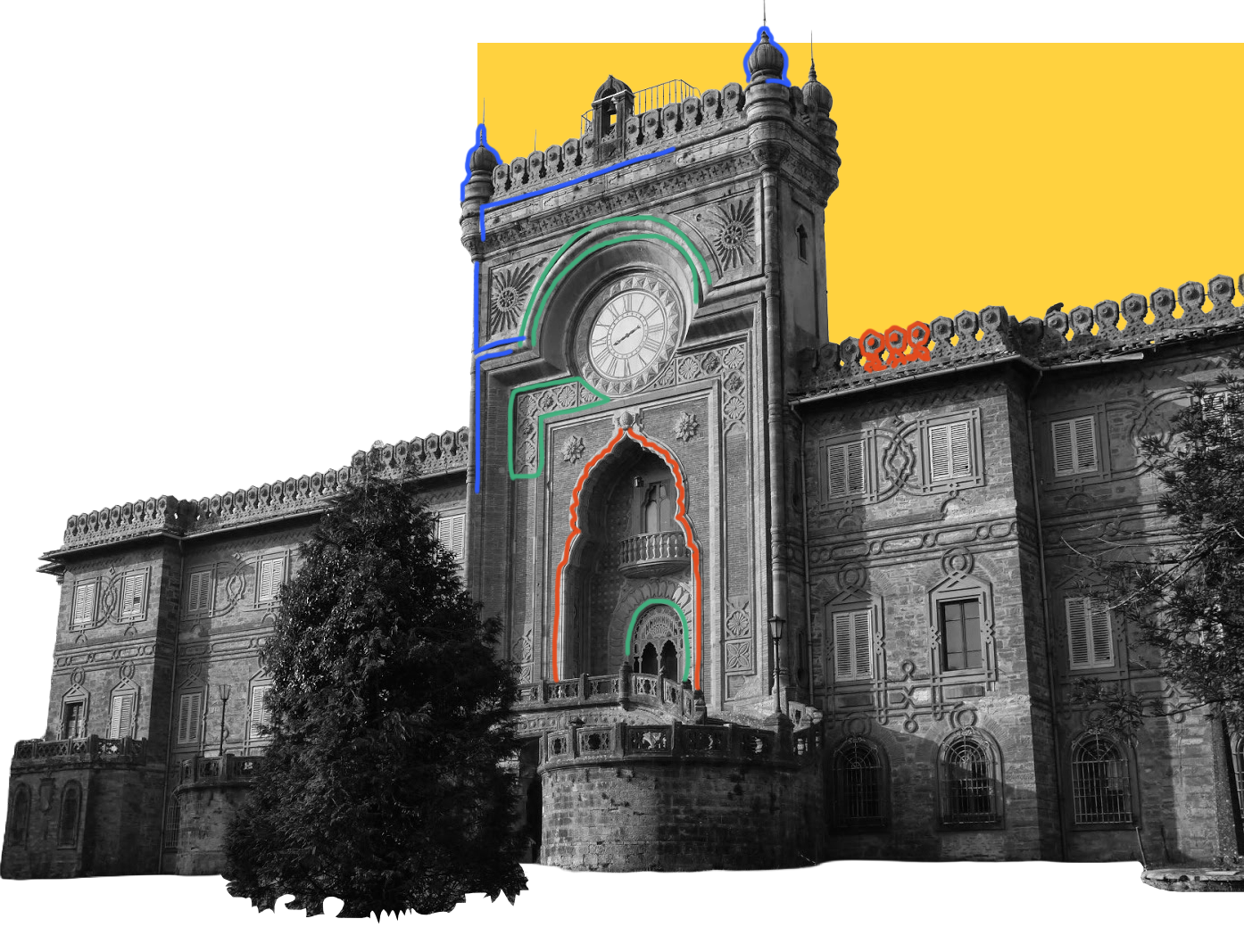
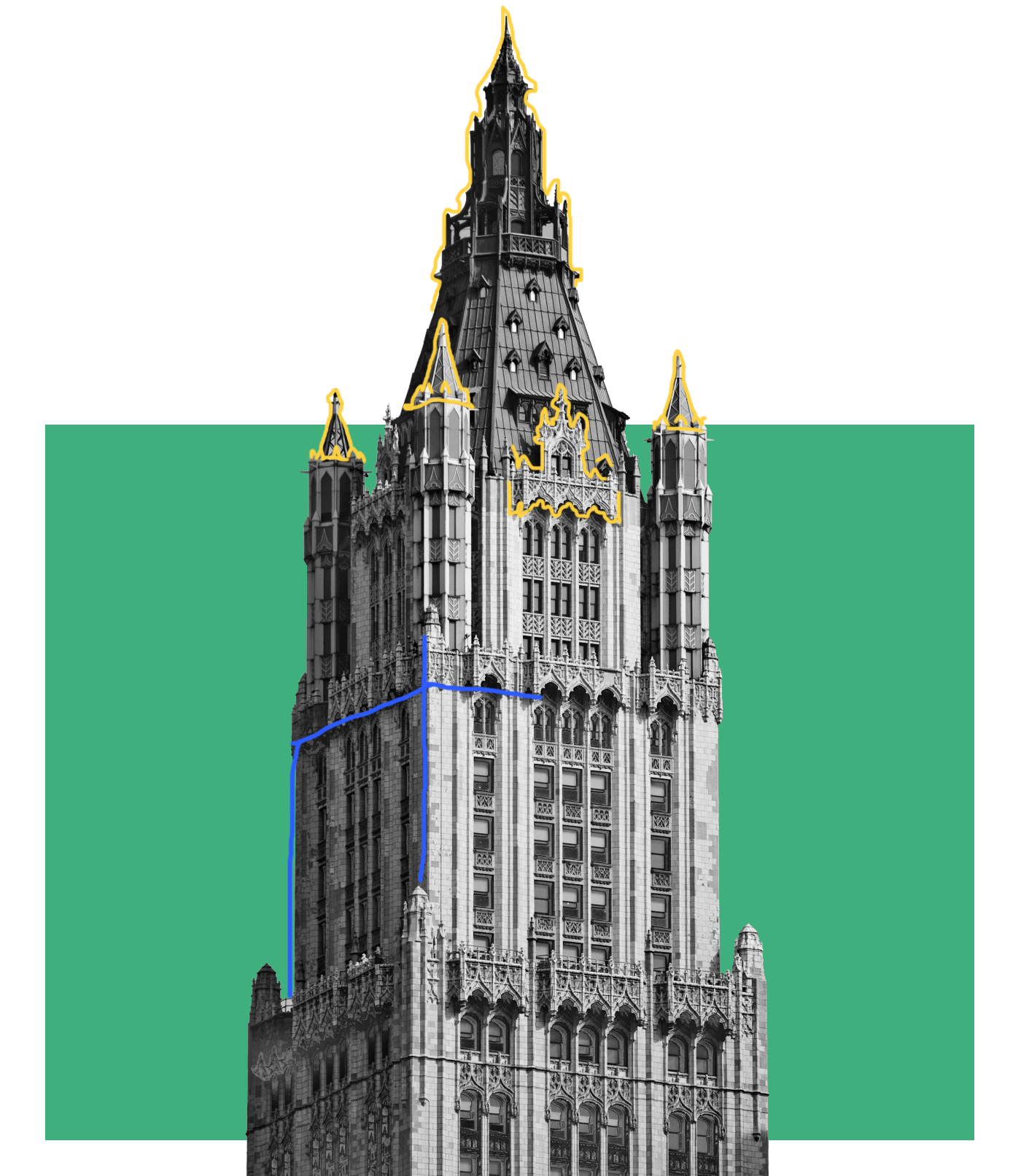
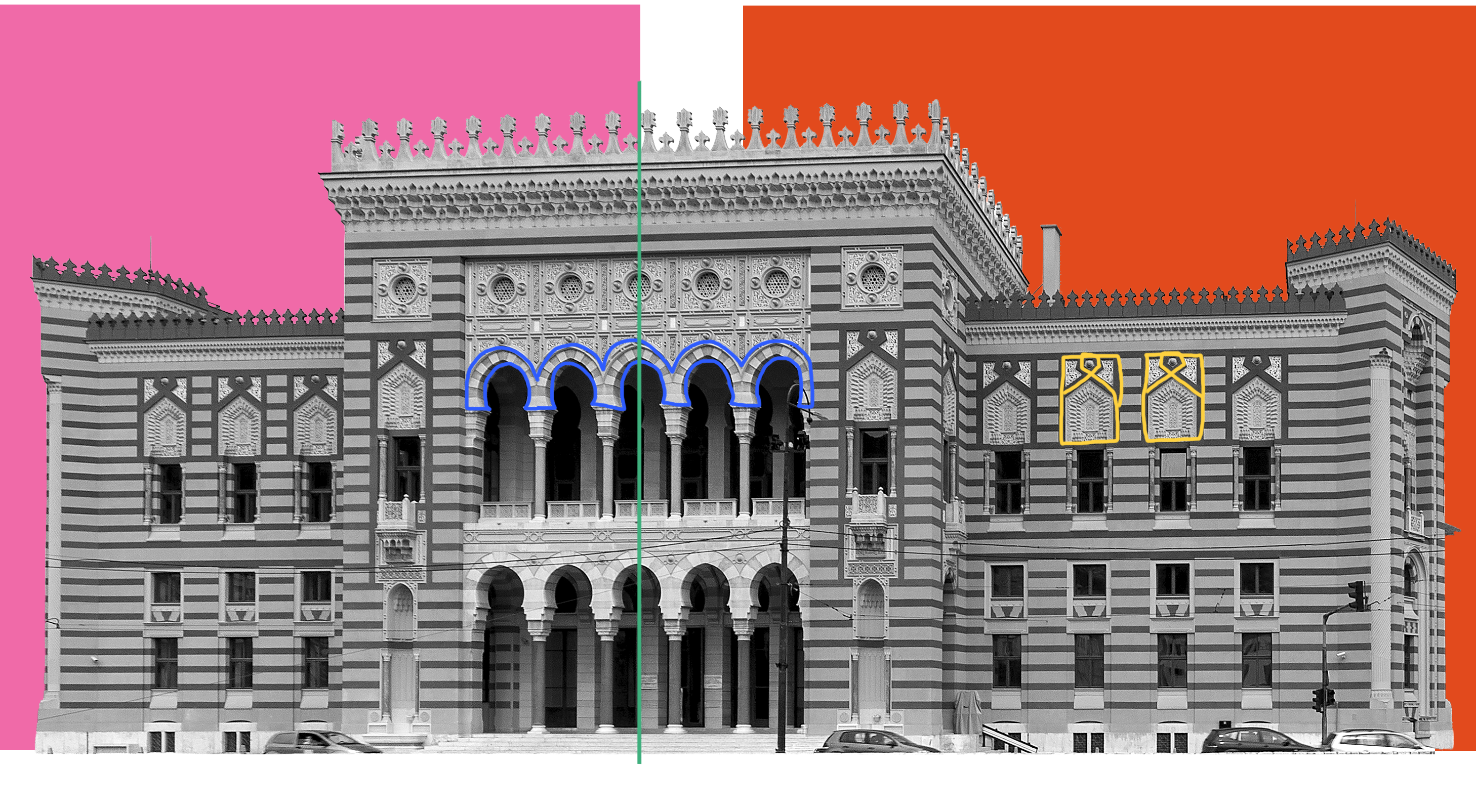
Eclecticism comes from the Greek eklektikos — meaning “to choose.”In architecture it refers to the intentional selection and combination of elements from multiple historical styles within a single architectural work. Rather than adhering to a unified formal language, eclectic architecture operates through reference, adaptation, and synthesis, drawing upon a broad archive of architectural history.
Unlike vernacular hybridity or informal stylistic mixture, eclecticism is typically associated with academic training, historical awareness, and deliberate stylistic choice.
CONSTRUCTION
VS.
REPRESENTATION
Architecture always balances how it is built with what it looks like.
In eclectic buildings, modern materials and structural systems support forms and decorations drawn from historic styles. The building’s construction may be cutting-edge while its representation recalls tradition.
This distinction highlights the tension between engineering function and symbolic meaning, where structure and style follow different logics but coexist in one object.
MODERNIST CRITIQUE
VS.
ECLECTISM
Modernism, emerging in the early twentieth century, asserts that architecture should express its own time through honesty in materials, clarity in structure, and functional simplicity.
Eclecticism, by contrast, treats architectural history as a rich archive to select and combine elements from multiple styles, embracing accumulation and contradiction. Where modernism demands unity and ideological clarity, eclecticism thrives on plurality and historical dialogue.
POLITICAL POWER
VS.
EXPRESSION
Architecture often functions as a tool to project authority and identity.
Eclectic buildings use historical references to convey political legitimacy and align with powerful traditions. Simultaneously, they serve as cultural texts that negotiate identity and hybrid exchange, reflecting complex social narratives beyond mere power.
Power and culture thus coexist and intersect in eclectic architecture’s layered meanings.