Y2K YOGA MUM CAROLYN BESSETTE-KENNEDY IPHONE 5 LANA DEL REY BAYOU ERA THE LOOP

DOWNGRADE

The hottest icons of 2026 have one thing in common:
they all look like the internet hasn’t been invented yet.

They’re just everywhere on it.

A short study of four longings that exist exclusively online.

Something strange has happened to our imagination lately. We look at photos of a woman who died in 1999 and say: now that was style. We buy capri pants from 2003 because that Pilates was more real. We listen to a singer who married an alligator tour guide in the Louisiana bayou and feel that this is what we’ve been missing. We dig an iPhone 5 out of a drawer and start taking photos with it on purpose, knowing the quality will be worse — because the worse quality means something now. Each of these is a microtrend on its own. Together, they say something heavier: we miss the time when not everything was archived, optimized, served by an algorithm. We miss an authenticity we no longer know how to manufacture ourselves. The catch: all of this longing is happening online. We post about it. The algorithm rewards it. Brands cash in on it. We’re romanticizing the escape through the very medium we claim to be escaping from. Four cases. Four different strategies. One thing in common: downgrade as a form of belonging.

01. Y2K YOGA MUM

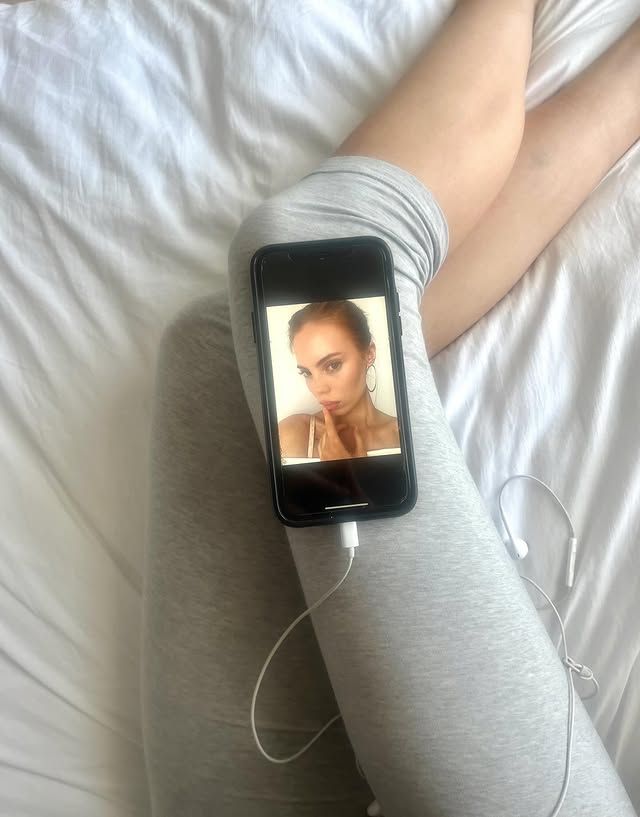
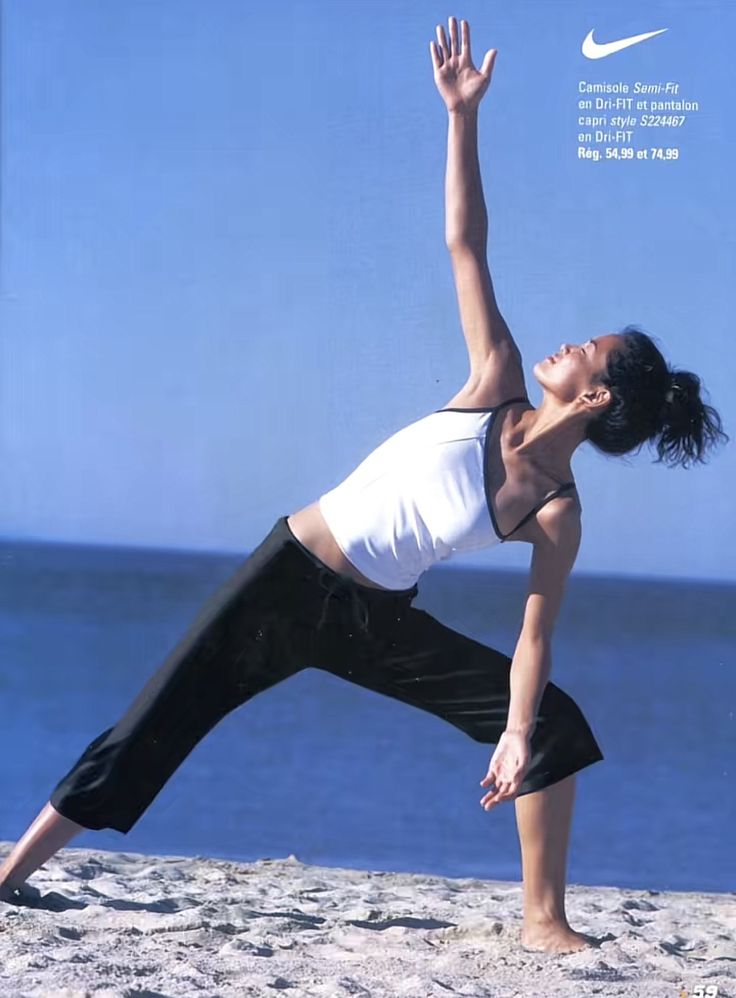
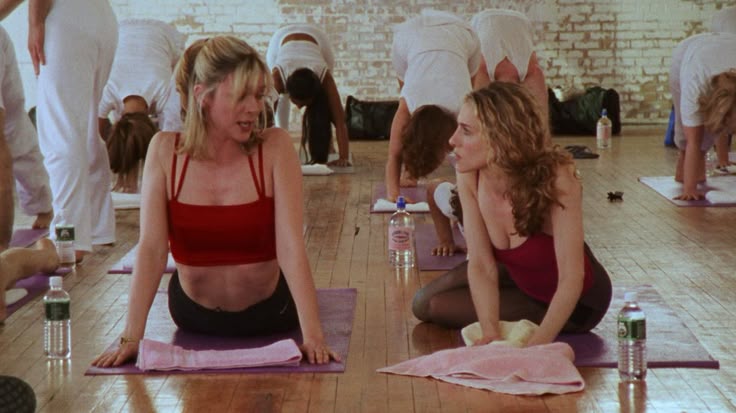
Something weird started happening to activewear in spring 2026. Searches for vintage activewear on Depop went up 169% in a single month. Girls stopped buying Lululemon. They started buying capri pants.

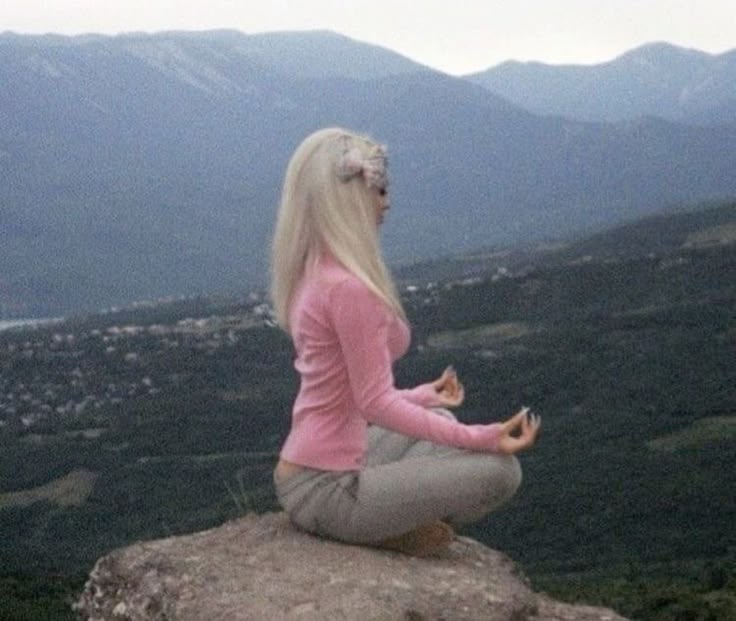
The trend has a name now: Y2K yoga mum. Inspiration: Christy Turlington in 2003, Jessica Alba walking out of a class, Madonna with a mat under her arm. The era when yoga wasn’t optimized yet. The era when fitness influencers didn’t exist.

“I want my activewear to look like I’m an early 2000s, California granola mum who religiously eats organic and does yoga every day”, one TikToker writes. “2006 New York, when SoulCycle had just been invented, everyone was still burning CDs, and no one had ever uttered the phrase ‘matching set’.”

That sentence is a manifesto. We don’t miss the movement itself. We miss the moment when movement wasn’t yet content.

Except this manifesto is a TikTok. Filmed in good lighting, with the right song, in a styled frame. Fitness influencers longing for the time before fitness influencers. They’re buying hibiscus prints, two-tone tops, headbands. They’re romanticizing the absence of romanticizing.

Pre-internet yoga now exists exclusively online.
02. CAROLYN BESSETTE-KENNEDY

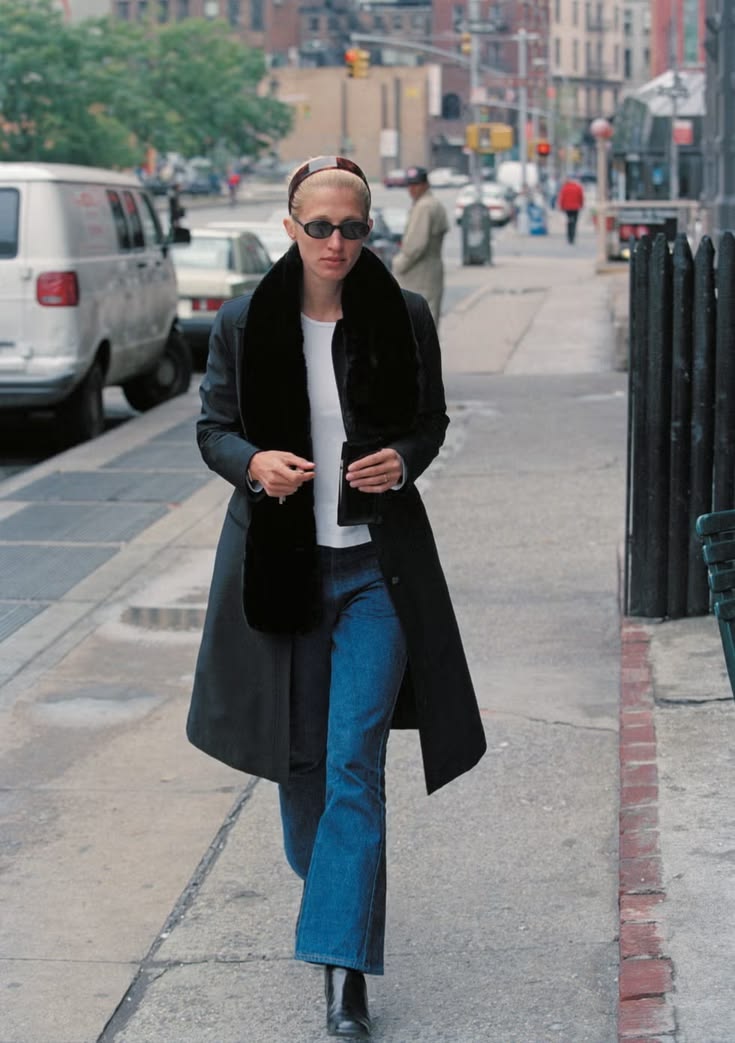
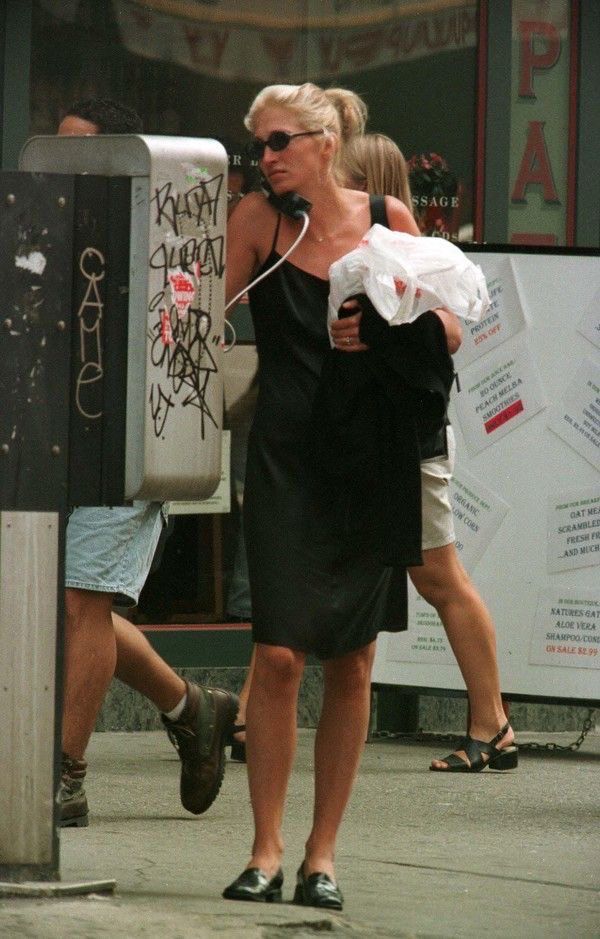
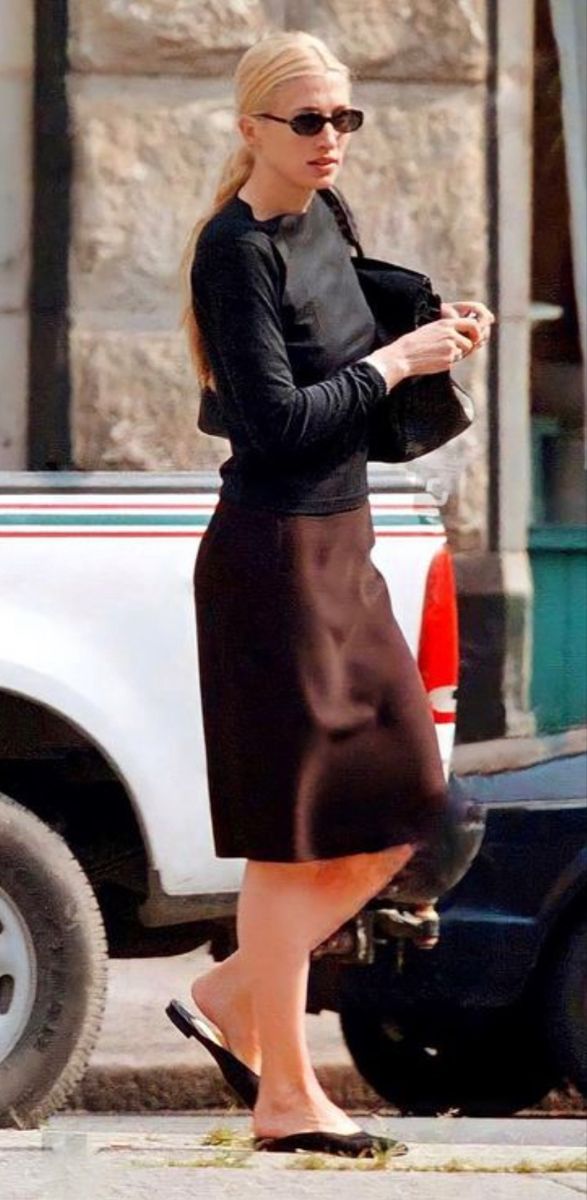
Carolyn Bessette-Kennedy never gave an interview. She didn’t have an Instagram — it launched eleven years after her death. She died in a plane crash off Martha’s Vineyard in 1999, age 33. For the past two years, she has been the most-pinned style reference on the internet. The pitch is always the same. Mid-90s Manhattan. PR job at Calvin Klein. A slip dress to marry John F. Kennedy Jr. Pencil skirts, black turtlenecks, slicked-back hair. Coffee in a paper cup. No makeup, because no one had invented clean girl yet.

The pitch leaves things out. It leaves out that the paparazzi made her life miserable. That she reportedly hated being photographed. That the most-shared image of her — head down, hand shielding her face — was taken at a moment she was visibly trying to disappear. We’ve made an aesthetic mood-board out of someone else’s panic attack. The current label is quiet luxury. It is a flattering frame. It is also a marketing one. The Row sells the look now. So does Khaite. So does every brand that figured out you can charge four-figure prices for a beige sweater if you call it discreet.

The deeper trick is what we’re doing with her absence. In an era where every girl with a phone is her own PR agency, a woman who didn’t post becomes the rarest thing of all: a blank screen. We project onto her the version of ourselves we can’t be — uncurated, unwatched, unbothered. She can’t disagree. She’s been gone since 1999. Bessette never chose to be an icon. The internet chose her — and rewrote her in its own image.

03. IPHONE 5

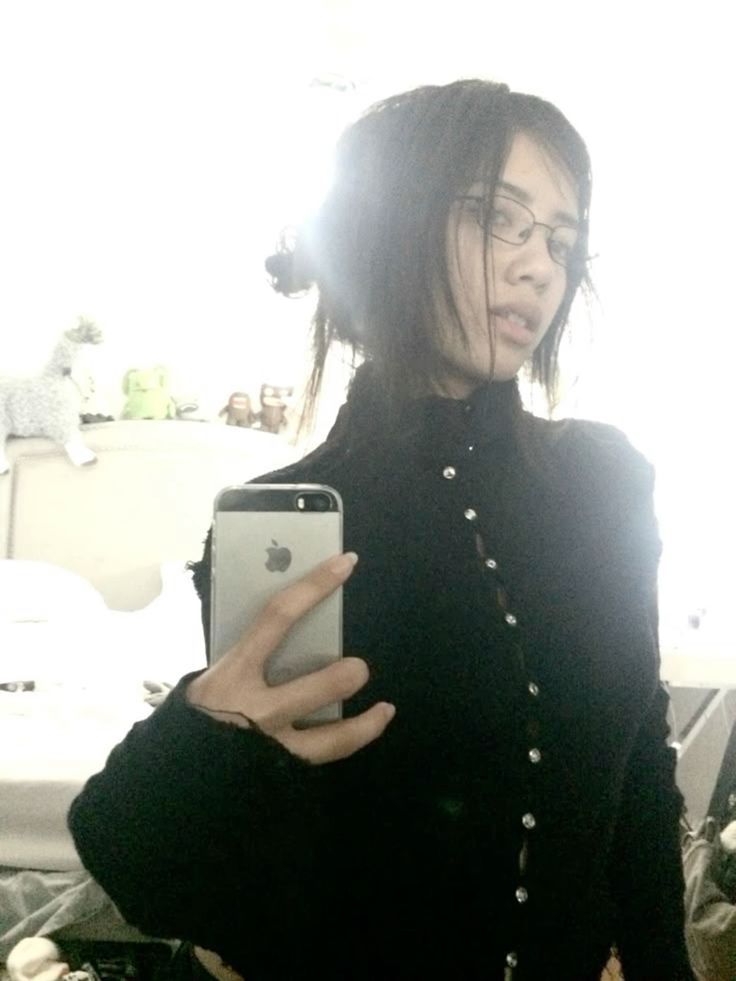
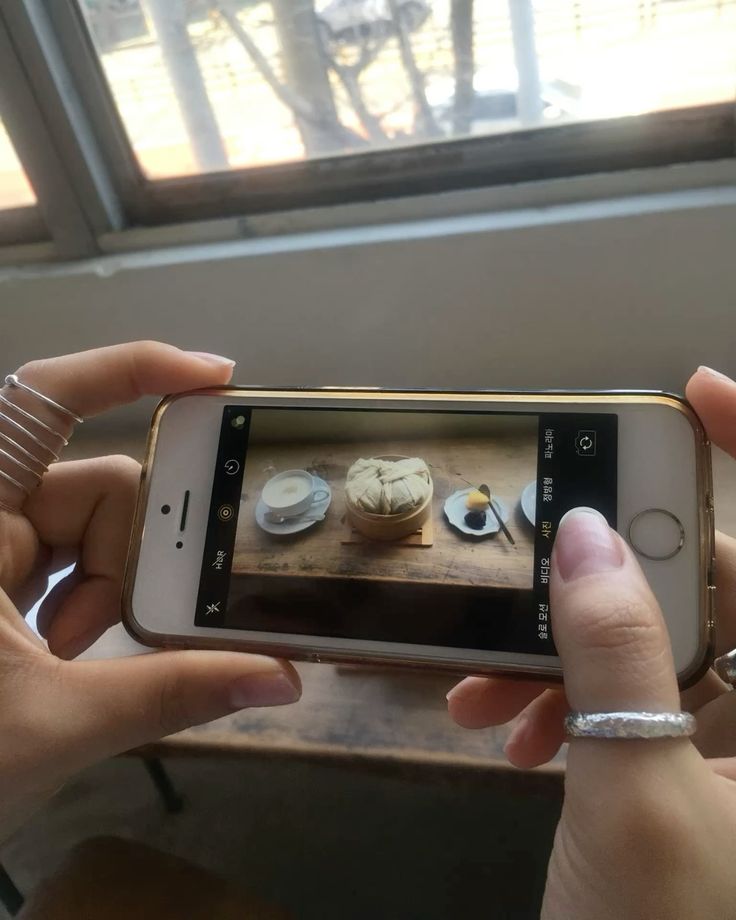
The trend has a name: young-tro. A portmanteau of young and retro. Girls are actively hunting iPhone 5s, 5s, first-gen SEs, 6s. They dig them out of their mum’s drawer, buy them on eBay, on Depop, at pawn shops. “Shooting with an old iPhone is like using a vintage film camera”, one of them says. “Even though I’m taking pictures in the present, they have a nostalgic feel.”

The numbers back it up. Digital camera shipments in 2025 hit their highest level in four years. Compact point-and-shoots — a category that died with the smartphone — clawed back from the grave with 2.4 million units a year. Anything but the iPhone 17 Pro.

Sounds beautiful.

Also sounds like an ad campaign.
Maybe that’s the whole point.

This isn’t nostalgia. It’s something stranger. You’re consciously choosing the worse tool — lower resolution, worse stabilization, harsh flash, weird color balance — because worse now means truer. Imperfection as a form of authenticity. The absence of optimization as an aesthetic statement.

Now here’s the punchline. The iPhone 5 is a digital object. It’s an Apple product, built around a screen, runs on electricity, connects to the internet. It just happens to be too old to do it well. Which means: we’re using technology to pretend technology isn’t there. We’re romanticizing a previous version of the same problem.

“Gen Z isn’t rejecting technology — they’re curating it”, one analyst writes. “They want tools that don’t dominate the experience, just participate in it.”

He's my white feather hawk tail deer hunter

04. LANA DEL REY BAYOU ERA

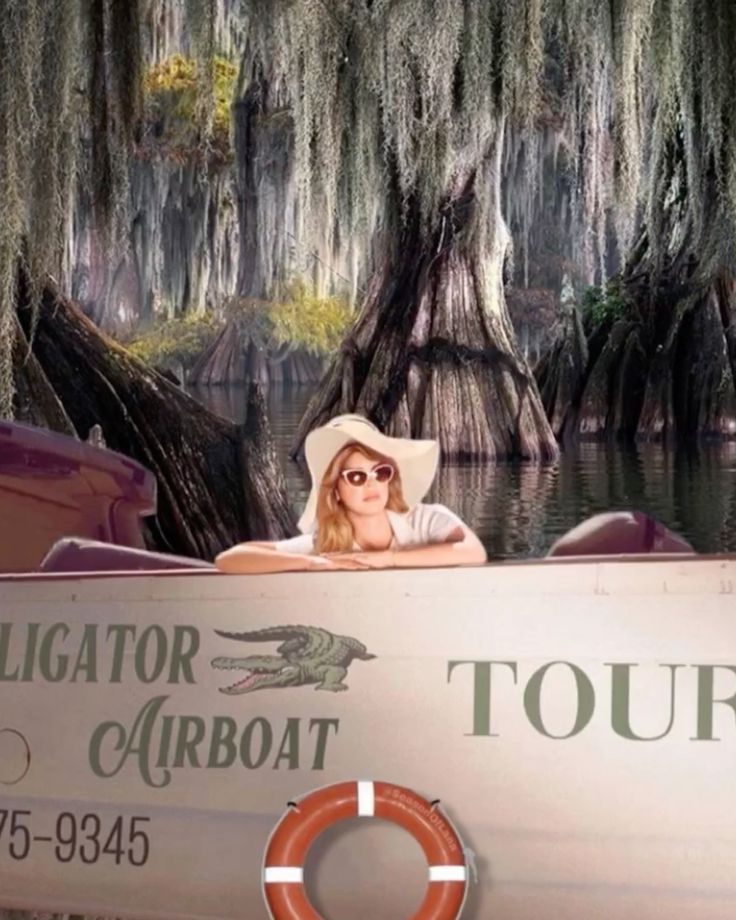
On February 17th, 2026, Lana Del Rey released a single called White Feather Hawk Tail Deer Hunter. Five nouns from the woods. Co-written with her husband, Jeremy Dufrene, whom she married in 2024 — a Louisiana swamp tour guide. A man who swims with alligators.

It’s the end of a long road. Lana — for a decade dismissed as a fake, posthuman, chronically online pop artist — left Los Angeles, moved to Louisiana, started writing country. Her album, out this spring, is called Stove. The most domestic, pre-electric object you can name.

Mainstream fans were confused. The original ones — cheered. This is the real Lana, they said. Finally. As if authenticity were a filter that screens out seasonal listeners.

The whole era is a Gen Z fantasy of escape, embodied in one man. The husband-as-swamp-guide is the ultimate anti-influencer — no Instagram, real physical work with real dangerous animals, lives where the signal is bad. Everything Lana wasn’t in 2014. Everything her fans want to be in 2026.

But the escape exists because she sings about it. The internet watched her become an icon. The internet is watching her try to stop being one. Stove will hit Spotify. The algorithm will count the streams. Pinterest will fill up with bayou moodboards.

THE LOOP

Let’s name the pattern plainly. A dead woman becomes a style icon because she can’t post. A 2003 yoga aesthetic comes back because today’s wellness influencers are exhausting. A pop singer marries a swamp guide and her oldest fans treat it as proof of authenticity. A fourteen-year-old phone becomes desirable because it takes worse photos.
Four different products. The mechanism is the same.

One. Every trend here is con­tent first. Bessette returned through TikTok edits, not biographies. Yoga mum is a hashtag with 200 million views. Lana announced her swamp era on Instagram. The iPhone 5 trend is mostly photos of iPhone 5s, not photos taken with them. Belonging to any of these requires posting that you belong.

Two. Every trend here is a downgrade sold as a discov­ery. Slower phones. Lower-resolution photos. Less-mark­eted clothes. Quieter lives. The downgrade is the point — it’s what signals you’ve seen through something other people haven’t.

Three. Every trend here is mo­netized. The Row sells the Bessette look. Depop is moving vintage Adidas at marked-up prices. Stove is a major-label release on Interscope. iPhone 5s on eBay cost more than they did new in 2014. There is no escape route here that isn’t also a checkout page.

Four. None of this is new. The 90s longed for the 70s. The 70s longed for the 50s. Nostalgia has always been a market. What’s new is the speed — twenty-six years from Bessette’s death to her TikTok renaissance, three years from a yoga aesthetic peaking to coming back. The cycle has accelerated to the point where revivals overlap with the originals.

The honest read: this isn’t a longing for the pre-internet world. It’s a longing for status in the current one. The aesthetic of being above the algorithm is just another thing the algorithm rewards. We didn’t downgrade. We rebranded.